Engine Overheating: Causes And Professional Solutions
The temperature gauge creeping into the red is one of those moments that demands immediate attention. Pull over, turn off the engine, and resist the urge to open the bonnet straight away. Driving an overheating engine, even for a short distance, can turn a manageable repair into a significant mechanical failure. That's why getting to a trusted car service in Ballina quickly is so important.
Engine overheating is one of the most common and damaging problems a vehicle can develop. It rarely happens without warning, but those early signs are easy to dismiss. Understanding the most common engine overheating causes, how they develop, and what a professional inspection involves gives car owners a clearer picture of what's at stake and what to do about it.
Driving an Overheating Car Is More Dangerous Than Most People Realise
Most drivers know that an overheating engine is bad news, but few appreciate how quickly damage escalates once the temperature exceeds safe operating range. An engine that runs hot for even a few minutes beyond its threshold can suffer warped cylinder heads, cracked engine blocks, and seized components that require full replacement rather than repair.
The risks of continuing to drive an overheating vehicle include:
- Warped or cracked cylinder heads that compromise the seal between engine components
- Blown head gaskets caused by extreme pressure and thermal stress
- Seized pistons or bearings from loss of oil viscosity under high heat
The moment the temperature gauge moves into the danger zone or steam appears from under the bonnet, stop the vehicle and call for assistance. A tow to a mechanic is significantly cheaper than the repairs that follow driving an overheating engine even a short distance further.
A Failing Cooling System Is Behind Most Overheating Problems
The cooling system is responsible for keeping the engine within its safe operating temperature range. It circulates coolant through the engine block and cylinder head, absorbs heat, passes it through the radiator to dissipate, and sends the cooled fluid back to repeat the cycle. When any part of that system fails, heat builds faster than the engine can manage.
Common cooling system failures that lead to overheating include:
- Low coolant levels caused by a slow leak in a hose, fitting, or the radiator itself
- A coolant leak that has allowed air into the system, reducing its efficiency
- Old or degraded coolant that has lost its heat transfer and anti-corrosion properties
- A blocked or partially blocked radiator restricting heat dissipation
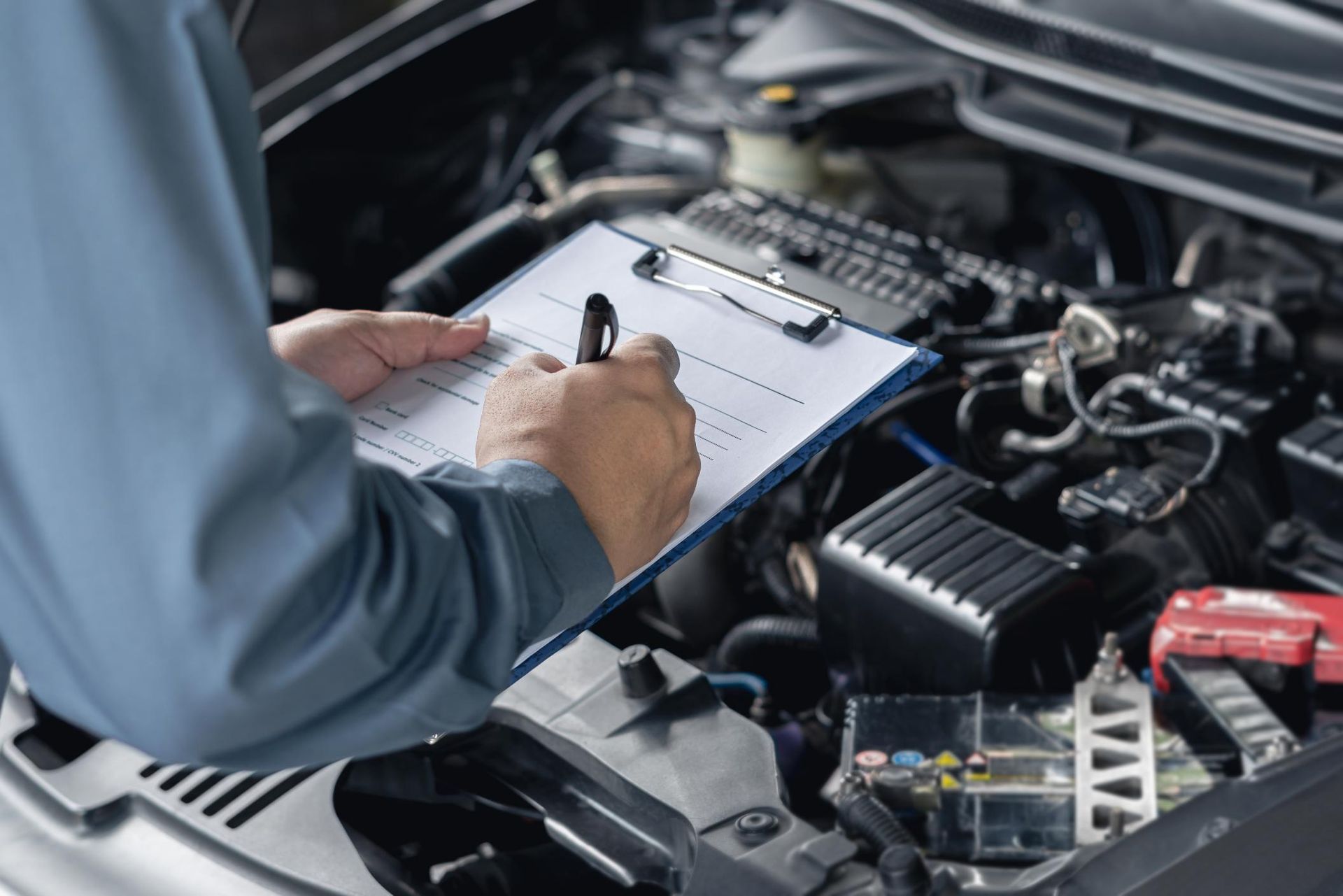
A professional car service includes a cooling system inspection that checks fluid levels, condition, and pressure tests the system for leaks that may not be immediately visible. Catching a slow coolant leak early is one of the simplest ways to avoid an overheating event.
What Happens When a Thermostat Sticks Closed
The thermostat is a small valve that controls when coolant flows from the engine to the radiator. It stays closed when the engine is cold to help it warm up quickly, then opens once operating temperature is reached to allow coolant to circulate through the radiator and cool down. When the thermostat sticks in the closed position, that circulation never happens.
A faulty thermostat produces a distinctive pattern of symptoms:
- The temperature gauge rises faster than usual from a cold start
- The engine reaches operating temperature but the gauge continues climbing
- Coolant may overflow from the reservoir as pressure builds with nowhere to go
A thermostat replacement is a relatively straightforward repair when diagnosed correctly. Stuck thermostats are sometimes misdiagnosed or overlooked in favour of more visible issues, which is why a thorough mechanical inspection is the reliable way to confirm the root cause before other components are replaced unnecessarily.
Could a Faulty Water Pump Be the Problem?
The water pump is the component that drives coolant through the entire cooling system. Without it circulating fluid effectively, even a full cooling system with functioning components cannot move heat away from the engine quickly enough to prevent overheating.
Signs that a water pump is failing often include:
- A whining or grinding noise from the front of the engine, caused by a worn bearing or impeller
- Coolant leaking from the pump housing or weep hole beneath the engine
- Overheating that occurs under load or at highway speeds but not at idle
Water pump failure tends to worsen gradually before it fails completely, which gives a window to catch it during a routine service. A mechanic checking belt condition, coolant flow, and pump noise during a service can identify the signs before a full overheating event occurs.
A Blown Head Gasket Is the Overheating Outcome Most Drivers Fear
The head gasket seals the join between the engine block and the cylinder head, keeping combustion gases, oil, and coolant in their respective passages. When an engine overheats severely, or when a pre-existing head gasket weakness is pushed by sustained heat, the gasket can fail and allow these fluids and gases to mix or escape where they shouldn't.
Symptoms that suggest a blown head gasket include:
- White or sweet-smelling exhaust smoke, indicating coolant burning in the combustion chamber
- Milky or frothy oil on the dipstick or inside the oil cap, which means coolant has mixed with engine oil
- Persistent overheating despite coolant levels being adequate
Head gasket replacement is one of the more involved engine repairs. In some cases, the cylinder head itself is warped and must be machined or replaced. A combustion gas test or pressure leak-down test is the accurate way to confirm a head gasket failure before committing to the repair.
Radiator Problems That Mechanics Find During a Car Service
The radiator is the component responsible for actually releasing heat from the coolant into the surrounding air. It's a dense network of small tubes and fins that can become restricted, corroded, or damaged in ways that significantly reduce its ability to keep coolant cool enough to do its job.
Radiator issues a mechanic looks for during an inspection include:
- External fin damage from road debris, which reduces airflow through the core
- Internal corrosion or scale build-up that narrows coolant passages
- Leaks at the tank-to-core seam or at inlet and outlet fittings
Radiator caps are often overlooked but are a genuine point of failure. A cap that cannot hold correct pressure lowers the boiling point of the coolant, making overheating more likely under normal conditions. Testing the cap and radiator is standard during a cooling system inspection at a car service.
Why Electric Cooling Fans Cause Overheating When They Stop Working
Most modern vehicles use electric fans mounted on the radiator to pull air through the core when the vehicle is stationary or moving slowly. At highway speeds, the airflow created by forward motion is usually sufficient, but at low speeds or in traffic, the electric fan does the work. When it fails, the engine has no way to shed heat while the car is idling or crawling.
Electric cooling fan problems that lead to overheating include:
- A failed fan motor that simply stops spinning
- A faulty fan relay or fuse that prevents the fan from receiving power
- A damaged temperature sensor that fails to trigger the fan at the correct engine temperature
Overheating that occurs specifically in slow traffic or at idle but not at highway speeds strongly suggests a cooling fan issue rather than a coolant or thermostat fault. Identifying that pattern during diagnosis avoids replacing components that aren't causing the problem.
Professional Diagnosis Is the Only Way to Find the Real Cause
Engine overheating causes can be deceptive. Low coolant might be a symptom of a head gasket leak rather than the cause of overheating. A thermostat might be working correctly while a water pump impeller has corroded to near-uselessness. Surface-level fixes that address the most visible issue often leave the underlying fault in place, and the overheating returns.
What a professional car service inspection for overheating involves:
- A cooling system pressure test to locate leaks that aren't visible externally
- Thermostat and water pump assessment under operating conditions
- A combustion gas test to check for head gasket integrity
Attempting to diagnose and repair an overheating engine without the right tools and experience risks compounding the damage. A professional mechanic works through the system methodically to identify the root cause, not just the most obvious symptom.
Don't Wait for a Breakdown to Book a Car Service in Ballina
We at K & T Ballina Mechanical know that the Northern NSW climate adds genuine stress to vehicle cooling systems. Long drives between towns, summer heat, and the kind of stop-start coastal traffic that builds up during holiday periods all push cooling systems harder than most drivers account for. A car that's running fine in mild conditions can develop overheating problems quickly when those factors combine.
If your temperature gauge has been running higher than usual, you've noticed coolant disappearing between top-ups, or you've had a recent overheating event and aren't confident the cause has been properly resolved, a car service in Ballina is the right next step. Our team inspects the cooling system as part of every service, and we carry out full diagnostic work on overheating faults to find the source rather than just addressing the symptoms.